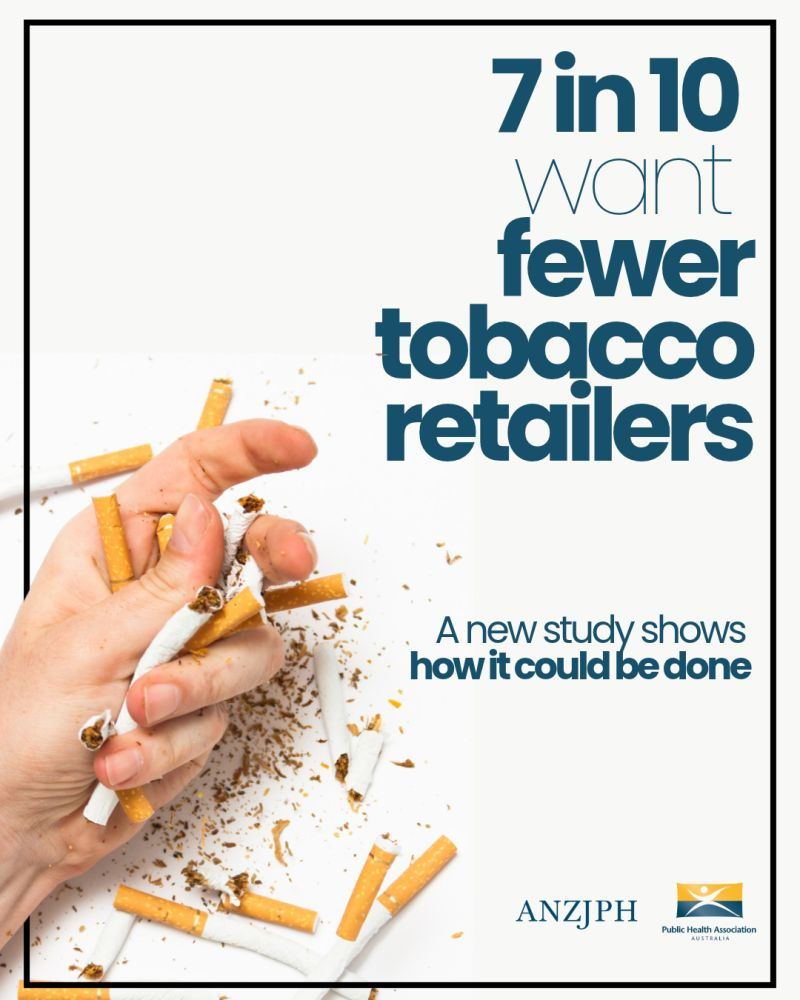
Two new studies published on 4 November in the Australian and New Zealand Journal of Public Health providing complementary evidence for governments considering the future of tobacco retailing: one shows what the community wants, while the other demonstrates how reducing tobacco availability could work in practice. With national smoking rates at record lows and strong public support for lowering the number of shops permitted to sell tobacco, reducing the number of cigarette retailers is the next logical step for Australia.
Our team's research, undertaken in collaboration with Cancer Council WA (CCWA), modelled a range of potential scenarios which could restrict the number of outlets permitted to sell tobacco - a product that is widely available, yet kills two in three longtime users. Scenarios looked at where tobacco could be sold, the types of retailers permitted to sell it, and their proximity to schools. The study found that allowing tobacco sales only at supermarkets could reduce the number of licensed tobacco retailers in WA by 82%, while prohibiting tobacco sales within 500 meters of schools could lower retailer numbers by 41%. A complementary survey by CCWA Make Smoking History program found that 70% of WA residents thought tobacco should be less available or not available at all, while 81% believed it should not be sold within 500 meters of a school. Together, the studies provide evidence of both strong community appetite for reducing tobacco availability, and practical options for governments.